Enclosed vehicle method
Container shipping needs a loading plan—not only a price.
Vehicle dimensions, shared or exclusive space, restraint method, packing policy and marine cover must be settled before the container is closed.
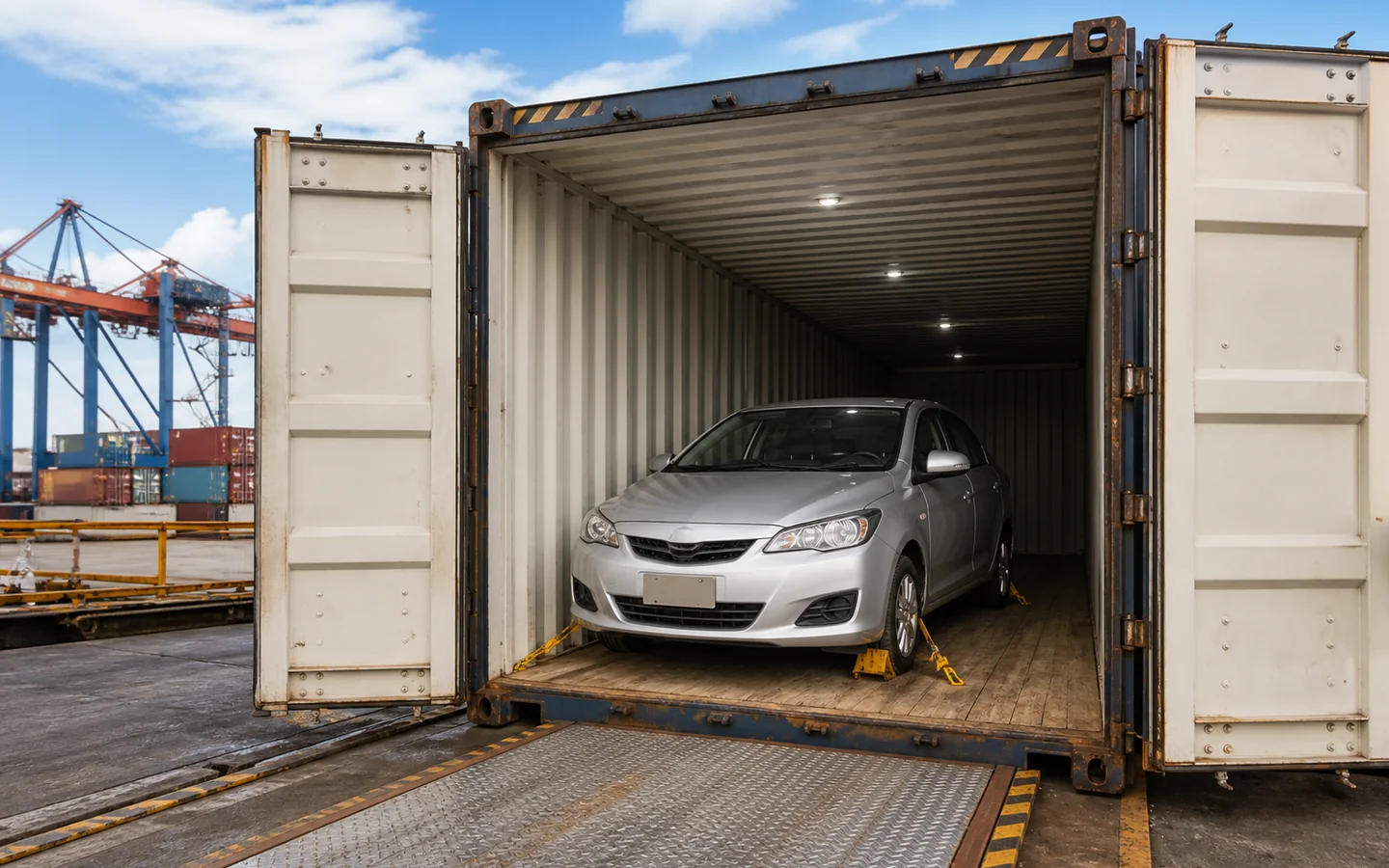
Practical sequence
Six container checkpoints.
A quotation is useful only when the physical loading scope is visible.
- 01
Measure the unit
Confirm length, width, height, ground clearance and non-standard accessories.
- 02
Choose the arrangement
State whether the rate is shared consolidation or exclusive container use.
- 03
Prepare the vehicle
Remove loose accessories, disclose leaks and follow the accepted fuel policy.
- 04
Load and restrain
Use wheel chocks and approved tie-down points without stressing body panels.
- 05
Record and seal
Complete the condition record, container number and seal reference.
- 06
Release at destination
Confirm customs, terminal handling and who is authorized to collect.
Before payment
Container quotation checklist
The final version should be attached to the actual quotation or booking—not inferred from a general webpage.
- ✓Shared or exclusive container
- ✓Container size and loading method
- ✓Vehicle dimensions and running condition
- ✓Personal-item policy in writing
- ✓Packing and restraint responsibility
- ✓Marine-cover premium and exclusions
- ✓Origin and destination terminal charges
- ✓Seal, release and claim evidence
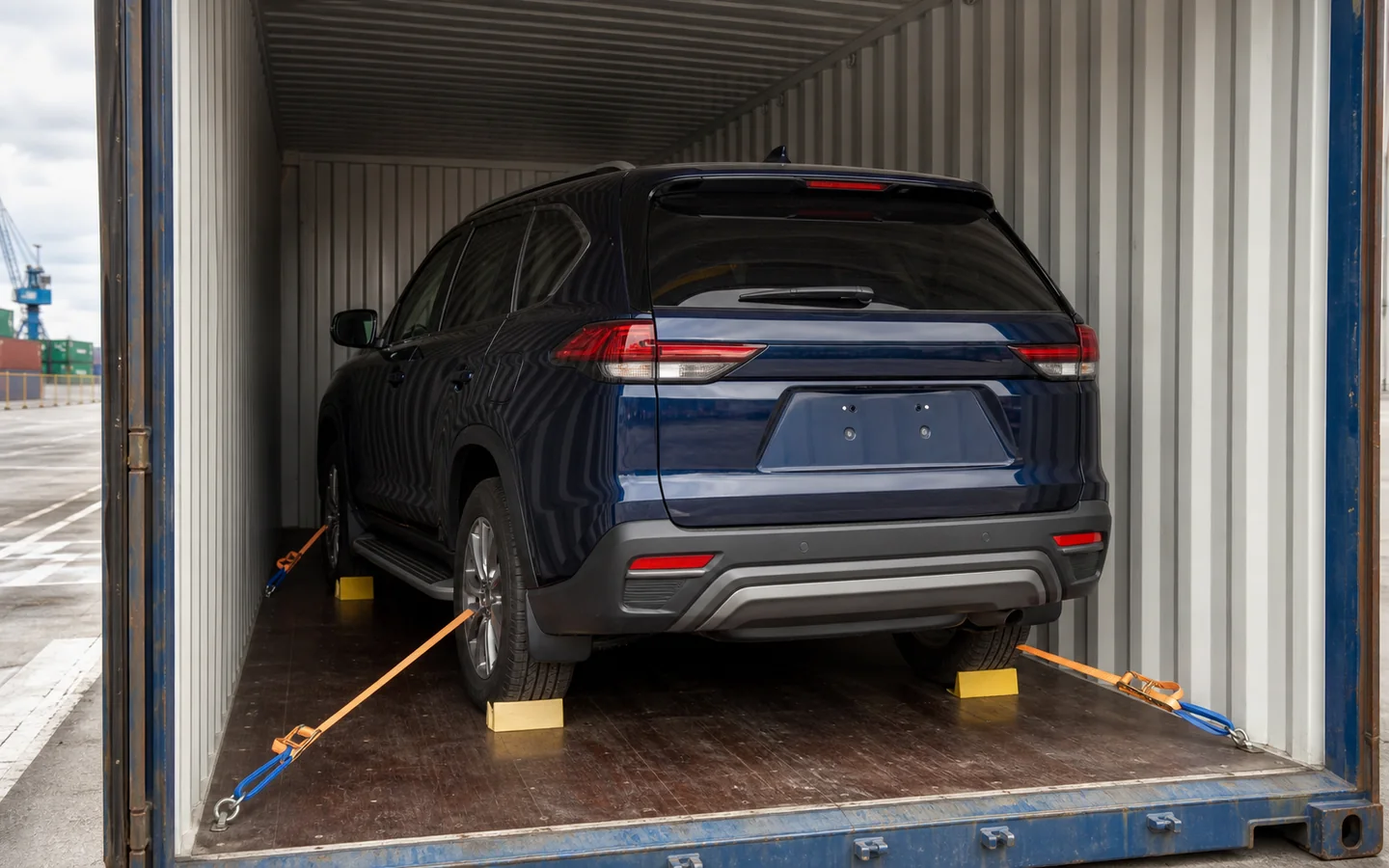
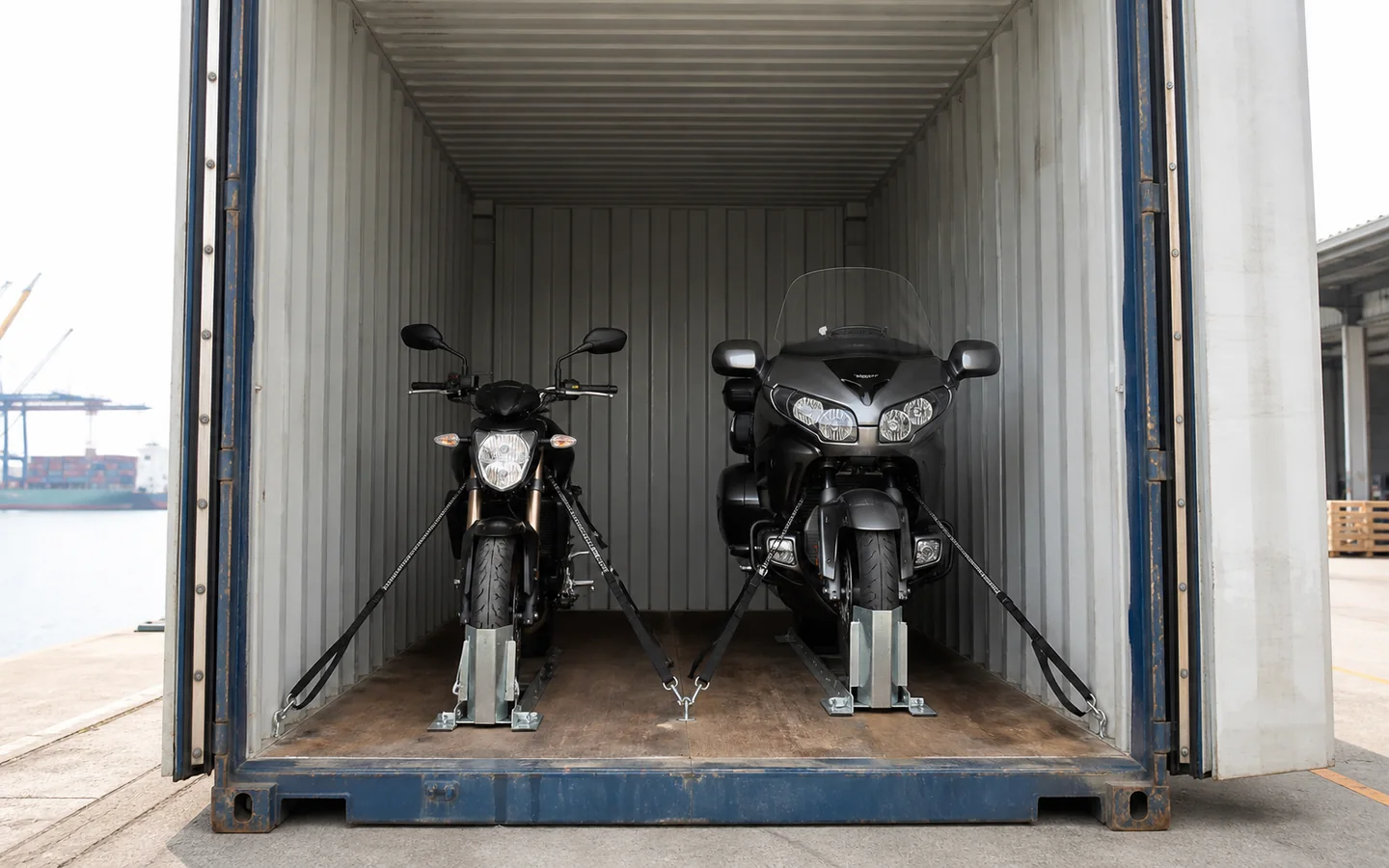
Vehicle classes
See the clearance before choosing a container.
FAQ
Confirm before committing.
Can personal items be placed in the container?+
Only when the written booking and customs/terminal policy allow them. Declare accepted items and confirm whether they are insured.
Is container always safer than RORO?+
It is enclosed, but risk still depends on loading, restraint, handling, coverage and release procedures.
Can an EV or hybrid use a container?+
Acceptance depends on carrier policy, battery condition, dangerous-goods requirements and route. Confirm before payment.
One verified thread